Energy Density Differences in Breakfast Foods
Educational content on nutrient characteristics. No promises of outcomes.
Introduction
Energy density refers to the amount of energy (measured in kilocalories or "calories") contained within a given weight of food. For example, a food with high energy density delivers more calories per gram than a food with low energy density. Understanding energy density helps clarify why breakfast portion sizes and meal composition vary across UK households. This article explores energy density across common breakfast foods and the factors determining these differences.
What Determines Energy Density?
Two primary factors influence energy density:
- Water content: Water contains zero calories. Foods with high water content (such as fresh fruit and vegetables) have lower energy density relative to foods with low water content.
- Fat content: Fat contains 9 kilocalories per gram. Carbohydrates and protein each contain 4 kilocalories per gram. Foods high in fat deliver more calories per gram than foods high in carbohydrates or protein alone.
Combining high water content with low fat content produces low-energy-density foods. Conversely, low water content combined with high fat content produces high-energy-density foods.
Low-Energy-Density Breakfast Foods
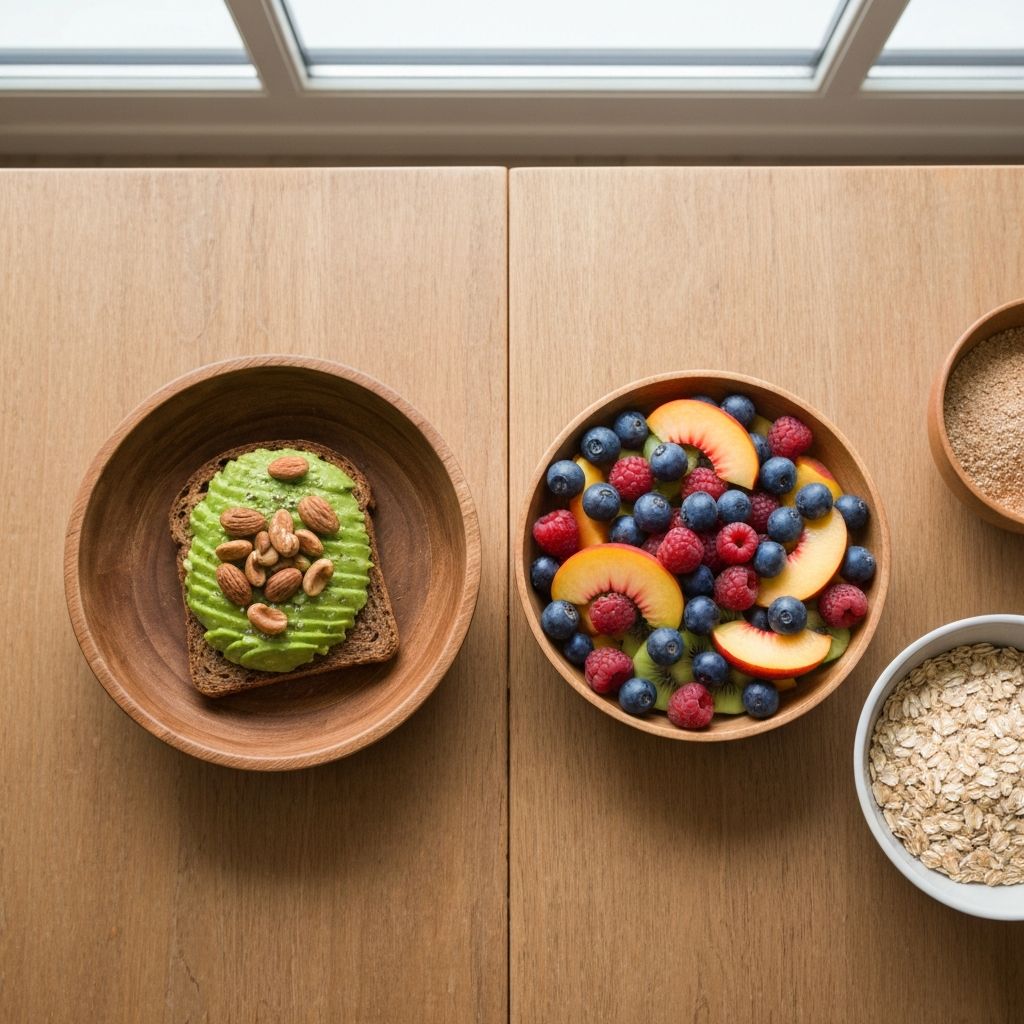
Fresh fruit: Apples, berries, pears, oranges, and other fresh fruit are approximately 80% to 90% water. A medium apple (182 grams) delivers approximately 95 kilocalories, yielding energy density of approximately 0.5 kilocalories per gram.
Vegetables: Tomatoes, peppers, and leafy greens are water-rich and deliver minimal energy per gram. A cup of raw spinach delivers approximately 7 kilocalories.
Plain porridge (oats with water): A 40-gram serving of dry rolled oats cooked in water expands substantially due to water absorption. The cooked porridge (approximately 200 to 250 grams) delivers roughly 150 kilocalories, yielding energy density of approximately 0.6 to 0.75 kilocalories per gram.
Plain yoghurt: Unsweetened yoghurt is approximately 85% water. 150 grams of plain yoghurt delivers approximately 100 kilocalories, yielding energy density of approximately 0.67 kilocalories per gram.
High-Energy-Density Breakfast Foods
Nuts: Almonds are approximately 4% water and 50% fat. A 28-gram serving (approximately 23 almonds) delivers approximately 164 kilocalories, yielding energy density of approximately 5.8 kilocalories per gram.
Seeds: Pumpkin seeds are approximately 5% water and 45% fat. A 28-gram serving delivers approximately 151 kilocalories, yielding energy density of approximately 5.4 kilocalories per gram.
Avocado: Despite being plant-based, avocado contains 15% fat by weight. Half an avocado (approximately 68 grams) delivers approximately 120 kilocalories, yielding energy density of approximately 1.8 kilocalories per gram.
Butter and oils: Fat in pure form contains 9 kilocalories per gram, yielding energy density of 9.0. A teaspoon of butter (5 grams) delivers approximately 36 kilocalories.
Intermediate-Energy-Density Foods
Whole eggs: Eggs are approximately 75% water and approximately 11% fat. A medium egg (50 grams) delivers approximately 78 kilocalories, yielding energy density of approximately 1.6 kilocalories per gram.
Wholegrain bread: Bread is approximately 40% water. A slice of wholegrain bread (30 grams) delivers approximately 80 kilocalories, yielding energy density of approximately 2.7 kilocalories per gram.
Smoked salmon: Salmon is approximately 65% water and 15% fat. A 100-gram serving delivers approximately 208 kilocalories, yielding energy density of approximately 2.1 kilocalories per gram.
Why Energy Density Matters for Breakfast Composition
Energy density influences breakfast portion sizes and meal composition in practical ways:
- Meal volume: Low-energy-density foods deliver fewer calories per unit weight, allowing larger portion sizes before reaching a specific energy target. For example, a person consuming 150 kilocalories of berries receives a larger quantity of food than a person consuming 150 kilocalories of almonds.
- Satiety and fullness: Meal volume and weight contribute to physical fullness sensations. Lower-energy-density foods occupying greater volume may extend subjective fullness for a given caloric intake.
- Practical portions: High-energy-density foods such as nuts are typically consumed in small portions (a handful or tablespoon) because their high caloric concentration means small amounts deliver substantial energy. Low-energy-density foods permit larger portions for the same energy content.
Typical UK Breakfast Composition and Energy Density
A typical full UK breakfast combining multiple items reflects various energy densities:
- Porridge (40 grams dry oats cooked): approximately 150 kilocalories, energy density ~0.75 kcal/g
- 2 tablespoons berries added: approximately 20 kilocalories, energy density ~0.4 kcal/g
- 1 tablespoon seeds sprinkled: approximately 50 kilocalories, energy density ~5.0 kcal/g
- Slice wholegrain toast: approximately 80 kilocalories, energy density ~2.7 kcal/g
- Boiled egg: approximately 78 kilocalories, energy density ~1.6 kcal/g
Total breakfast energy: approximately 380 kilocalories, combining a variety of energy densities.
Processed vs Minimally-Processed Options and Energy Density
Instant oatmeal vs rolled oats: Instant oatmeal is finely ground and absorbs liquid more readily, potentially delivering higher energy density than rolled oats when equivalent water is added. However, energy per serving (caloric content) may be similar; the difference lies in preparation and density.
Sweetened cereals vs plain oats: Ready-to-eat sweetened cereals are less dense (more air between particles) than oats, but the same weight delivers comparable or slightly higher energy due to added sugars.
Flavoured yoghurt vs plain yoghurt: Added sugars increase the energy content without substantially increasing water content, raising the energy density of flavoured varieties compared to plain yoghurt.
Individual Responses to Energy Density
Individual physiological responses to energy density vary based on factors including meal composition, food form (whole food versus processed), fibre content, and individual satiety mechanisms. Energy density alone does not determine satiety; the nutrient composition and form of food also influence how long fullness persists.
Conclusion
Energy density varies across common UK breakfast foods from 0.4 kilocalories per gram (fresh fruit) to 9.0 kilocalories per gram (pure fat). This variation reflects differences in water and fat content. Understanding energy density helps explain why breakfast portions range from small quantities of nuts to larger servings of porridge, and how typical breakfast meals combine ingredients of varying energy densities.
Energy density alone does not determine breakfast choices; nutrient profile, food form, and individual preference also shape everyday breakfast composition.