Fibre-Rich Options and Their Satiety Characteristics
Educational content on nutrient characteristics. No promises of outcomes.
Introduction
Dietary fibre is the non-digestible portion of carbohydrates present in plant foods. At breakfast, fibre content influences how quickly the stomach empties and how long feelings of fullness persist. This article explores common UK breakfast fibre sources, their nutrient profiles, and mechanisms by which fibre influences satiety.
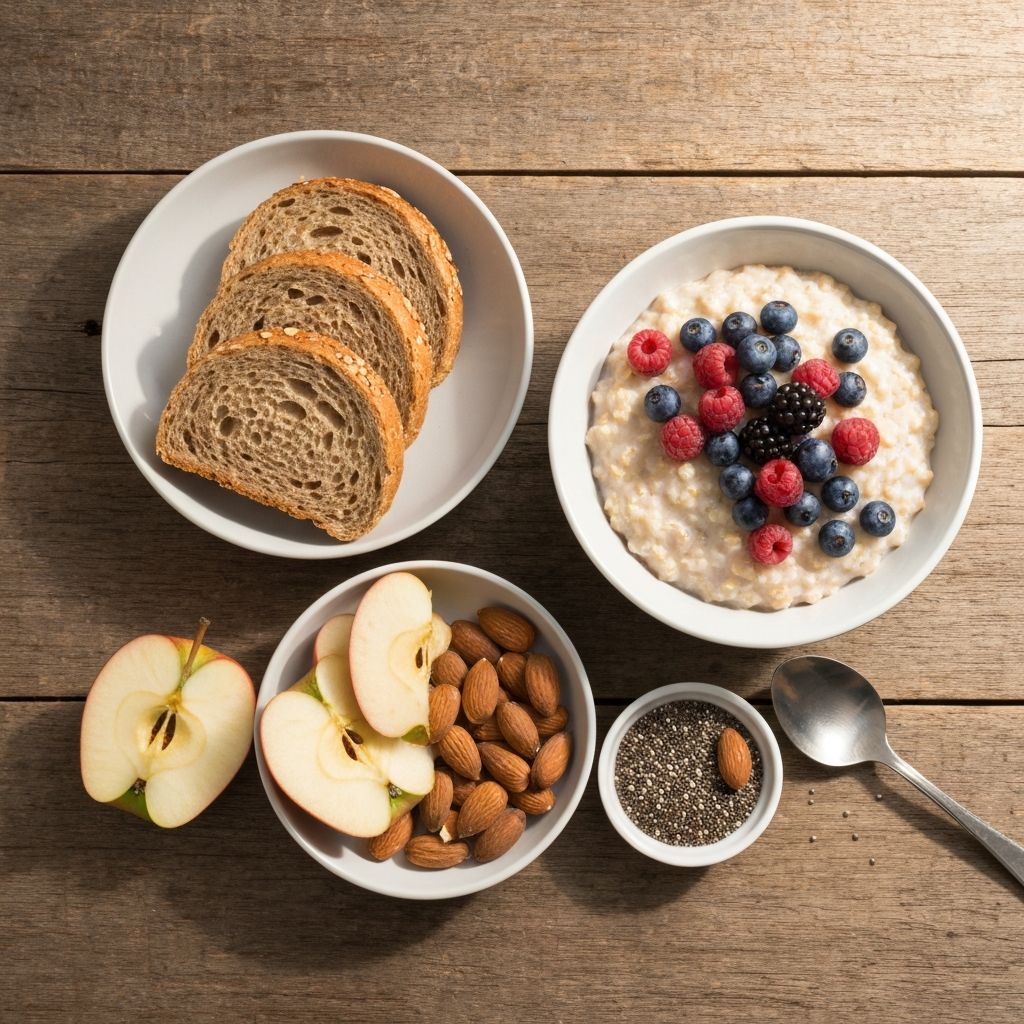
Rolled Oats: A Fibre-Rich Grain
Fibre content: A typical 40-gram serving of rolled oats (dry weight) contains approximately 6 to 8 grams of dietary fibre.
Fibre type: Oat fibre is predominantly soluble fibre (beta-glucans), which dissolves in water and forms a gel-like substance in the digestive tract.
Preparation methods: Cooking oats with liquid does not substantially reduce fibre content. Overnight oats (uncooked oats soaked in liquid) retain the same fibre quantity as cooked porridge.
Context: Rolled oats are a minimally-processed whole grain. They deliver consistent fibre content compared to refined grain products such as instant oatmeal or processed cereals.
Wholegrain Bread: Fibre from Grain Products
Fibre content: A single slice of wholegrain bread (approximately 30 grams) contains roughly 2 to 4 grams of dietary fibre, depending on grain composition and degree of refinement.
Fibre type: Wholegrain bread contains insoluble fibre (from grain bran) and soluble fibre (from grain endosperm).
Comparison with white bread: White bread made from refined grain flour contains significantly less fibre (typically 1 gram or less per slice) because the bran layer has been removed during processing.
Context: Wholegrain bread is considered a minimally-processed option, retaining the nutrient-dense bran and germ portions of the grain.
Fresh Fruit: Fibre from Plant Sources
Fibre content varies by fruit type:
- Medium apple with skin: approximately 4 grams fibre
- Medium banana: approximately 3 grams fibre
- 150 grams mixed berries: approximately 4 grams fibre
- Medium pear with skin: approximately 6 grams fibre
Fibre type: Fruit fibre consists of both soluble and insoluble components.
Context: Whole fruit delivers fibre alongside water content and natural sugars. Fruit juices, by contrast, contain minimal fibre because the pulp is typically removed during processing.
Seeds and Nuts: Concentrated Fibre Sources
Fibre content:
- 1 tablespoon (15 grams) mixed seeds: approximately 2 to 3 grams fibre
- 1 ounce (28 grams) almonds: approximately 3.5 grams fibre
Fibre type: Seeds and nuts contain primarily insoluble fibre.
Context: Seeds and nuts are energy-dense due to high fat content. Breakfast portions are typically small (a small handful or tablespoon), contributing fibre without excessive caloric load.
How Fibre Influences Satiety Mechanisms
Multiple physiological pathways explain how breakfast fibre influences satiety:
- Gastric emptying rate: Soluble fibre slows the rate at which the stomach releases food into the small intestine, extending the time food remains in the stomach and signals fullness.
- Meal volume and viscosity: Fibre contributes to meal volume and, in the case of soluble fibres like beta-glucans in oats, increases viscosity (thickness) of the meal as it passes through the digestive tract.
- Nutrient absorption timing: Slower digestion and absorption of other nutrients due to fibre presence may extend satiety duration.
Important note: These mechanisms have been documented in controlled laboratory research. Individual responses to fibre vary based on baseline fibre intake, gut microbiota composition, digestive tolerance, and other factors.
Minimally-Processed vs Processed Breakfast Options
Minimally-processed examples:
- Rolled oats (whole grain)
- Wholegrain bread
- Fresh whole fruit
- Plain seeds and nuts
Processed alternatives and fibre content:
- Instant oatmeal: often contains added sugars; fibre content similar to rolled oats per serving
- Sweetened ready-to-eat cereals: typically lower fibre content than wholegrain options; often contain added sugars
- White bread: significantly lower fibre than wholegrain varieties
- Fruit juice: minimal fibre compared to whole fruit
The fibre content difference between minimally-processed and refined alternatives can be substantial, particularly for grain products.
Portion Norms and Fibre Contribution
Typical UK breakfast portions and their approximate fibre contributions:
- 40 grams rolled oats: approximately 6 to 8 grams fibre
- 2 slices wholegrain toast: approximately 4 to 8 grams fibre
- 150 grams mixed berries: approximately 4 grams fibre
- 1 tablespoon seeds: approximately 2 to 3 grams fibre
A fibre-rich breakfast combining multiple sources can deliver 15 to 25 grams of total dietary fibre per meal, contributing significantly to recommended daily fibre intake (30 grams per day for UK adults).
Individual Tolerance and Adaptation
Rapid increases in fibre intake can cause temporary digestive discomfort including bloating and gas, as gut bacteria ferment undigested fibre. Individual tolerance varies based on:
- Baseline dietary fibre intake (prior to breakfast change)
- Gut microbiota composition and adaptability
- Individual digestive sensitivity
- Hydration level (adequate water intake supports fibre digestion)
Gradual introduction of fibre-rich foods allows gut adaptation without acute discomfort.
Conclusion
Common UK breakfast fibre sources—rolled oats, wholegrain bread, fresh fruit, and seeds—vary in fibre content from 2 to 8 grams per typical portion. Laboratory research documents physiological mechanisms by which fibre influences gastric emptying and satiety duration, yet individual responses remain variable based on adaptation, tolerance, and metabolic factors.
Understanding fibre content and physiological context supports informed everyday breakfast choices without prescribing any specific fibre quantity as universally optimal.